A Sponsor’s Guide to Signal Detection for IND, NDA, BLA, and Post Marketing Programs
👤 Dr. Sornaraja Thasma | 🗓️ 22 June 2026 | 📂 Pharmacovigilance

Introduction
Every successful drug development program is built on a foundation of patient safety. From the first patient enrolled in a clinical trial to years after a product reaches the market, safety surveillance remains one of the most critical responsibilities for pharmaceutical and biotechnology companies.
Regulatory agencies worldwide expect companies to identify, evaluate, and manage emerging safety concerns throughout a product’s lifecycle. This process is known as signal detection.
A well executed signal detection strategy can help organizations identify potential risks early, support informed benefit risk decisions, and maintain regulatory compliance. On the other hand, delayed detection of safety signals can result in regulatory scrutiny, label changes, clinical holds, product withdrawals, and damage to corporate reputation.
This guide explains how Signal Detection and Risk Management supports IND, NDA, BLA, and post marketing programs while helping development teams maintain a proactive approach to drug safety.
What Is Signal Detection?
Signal detection is the process of identifying new or changing safety information associated with a medicinal product. A safety signal may indicate a previously unknown adverse event or a change in the frequency, severity, or outcome of a known adverse reaction.
Safety signals can emerge from multiple sources including:
- Individual Case Safety Reports
- Clinical trial data
- Scientific literature
- Regulatory authority communications
- Patient support programs
- Real world evidence databases
- Social and digital media monitoring
The objective is not simply to collect safety data but to identify patterns that may require further investigation.
For example, if a clinical development program receives 15 reports of a specific adverse event over a six month period compared with only 2 reports during the previous year, this trend may warrant signal evaluation.
Why Signal Detection Is Critical Across the Product Lifecycle
Drug safety monitoring is not limited to commercial products. Regulatory expectations begin long before marketing approval.
Safety profiles evolve as product exposure increases and more clinical and real world data become available. What may appear to be an isolated event during early development can emerge as a meaningful safety signal when evaluated across larger patient populations. This makes signal detection a continuous activity that supports informed decision making from development through commercialization.
During IND Programs
Investigational New Drug programs(IND) generate large volumes of safety information during Phase I, Phase II, and Phase III studies.
During clinical development, safety data are continuously collected from study participants across different dose levels, patient populations, and treatment durations. Early identification of emerging risks allows development teams to take proactive measures before potential issues affect trial progress or participant safety. Effective signal detection at this stage contributes to better oversight and stronger risk management strategies.
At this stage, signal detection helps organizations:
- Identify emerging safety trendsMonitor adverse
- event frequency
- Support Development Safety Update Reports
- Guide protocol modifications
- Protect study participants
Industry data suggests that approximately 30 percent of clinical trials experience protocol amendments related to safety observations. Early signal detection can reduce delays and support better trial decision making.
During NDA and BLA Submissions
When preparing a New Drug Application or Biologics License Application, sponsors must present a clear understanding of the product’s safety profile.
By the time a product reaches the submission stage, regulators expect a thorough evaluation of all accumulated safety data. This includes identifying trends, assessing potential risks, and demonstrating that appropriate safety monitoring has been conducted throughout development. Benefit risk management is also a critical component of this evaluation, helping organizations demonstrate that the therapeutic benefits continue to outweigh potential risks. A well documented signal management process can strengthen regulatory confidence and support a smoother review process.
Regulators expect comprehensive analyses of:
Adverse event trends
Safety concerns across studies
Benefit risk assessments
Potential risk mitigation measures
A structured Signal Detection and Risk Management framework strengthens the quality of safety documentation and supports regulatory review.
Review teams frequently examine cumulative safety data from thousands of patients. Missing a critical signal during this stage can significantly impact approval timelines.
During Post Marketing Surveillance
Many important safety findings emerge only after larger patient populations begin using a product.
Post Marketing Surveillance plays a critical role in monitoring product safety under real world conditions. The transition from controlled clinical trials to widespread clinical use introduces new variables that may influence a product’s safety profile. Patients with diverse demographics, underlying medical conditions, and concomitant medications can reveal risks that were not apparent during clinical development.
Clinical trials may involve several hundred or several thousand participants. Once approved, a product may be prescribed to millions of patients across diverse populations.
Historical data shows that nearly 50 percent of major safety label updates occur after product approval.
Post marketing signal detection activities help organizations:
- Monitor real world safety trends
- Detect rare adverse events
- Assess long term safety outcomes
- Support regulatory reporting obligations
Update risk management plans
As a core component of Post Marketing Surveillance, Signal Detection and Risk Management helps organizations continuously evaluate emerging safety information and maintain an up to date understanding of product risks and benefits throughout the commercial lifecycle.
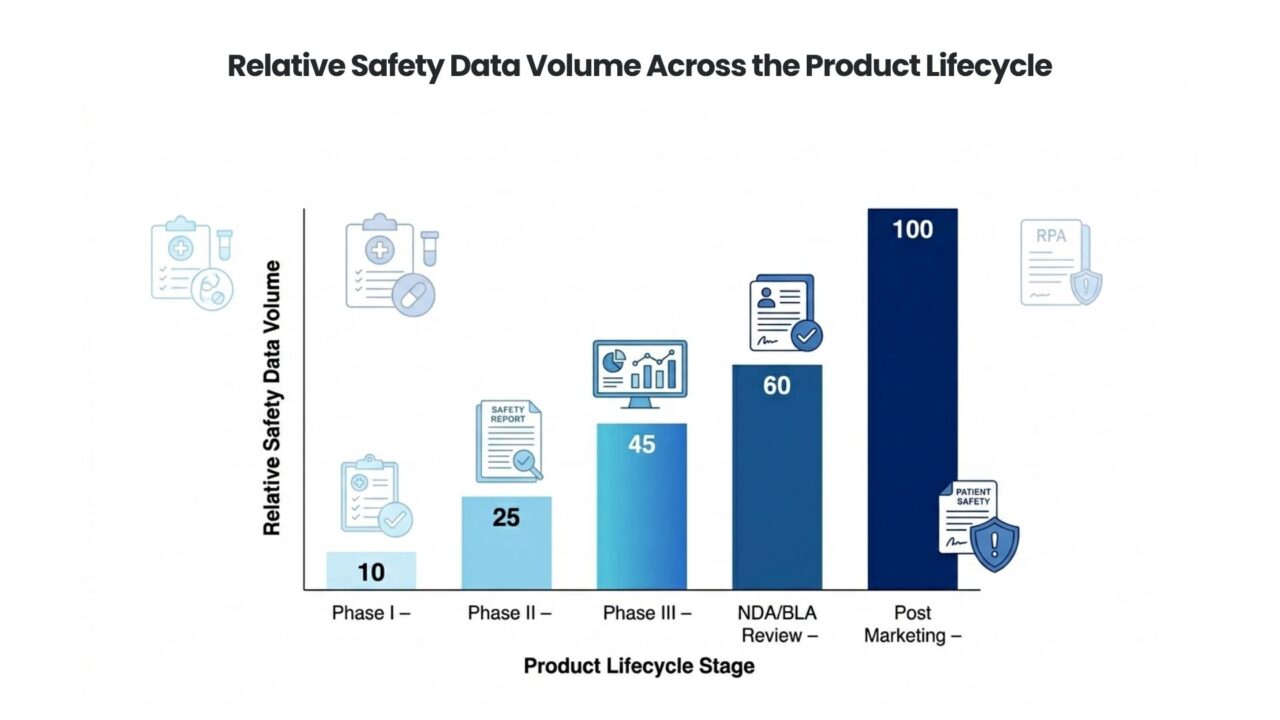
As a product advances from Phase I studies to post marketing surveillance, the volume of safety information increases significantly. This growing volume highlights the need for robust Signal Detection and Risk Management processes to identify, assess, and manage emerging safety concerns throughout the product lifecycle.
Key Sources Used for Signal Detection
Effective signal management relies on data collected from multiple sources. No single data source can provide a complete picture of a product’s safety profile. Combining information from different channels allows organizations to identify potential risks more effectively and make informed safety decisions throughout the product lifecycle.
Individual Case Safety Reports
Individual Case Safety Reports (ICSRs) remain one of the most valuable sources for signal identification. These reports often provide the earliest indication of potential safety concerns and can help identify unusual patterns that warrant further investigation.
Medical reviewers analyze:
- Serious adverse events
- Unexpected reactions
- Fatal outcomes
- Events of special interest
Consistent review of case narratives often reveals patterns that statistical methods alone may not identify.
Aggregate Safety Data
Aggregate analyses evaluate trends across multiple reports and datasets. By examining cumulative safety information, organizations can identify trends that may not be visible when reviewing individual cases in isolation.
These assessments may include:
- Reporting rates
- Event frequencies
- Demographic trends
- Geographic distribution
- Product exposure estimates
Aggregate reviews provide broader context for emerging safety concerns.
Scientific Literature
Published medical literature continues to be an important source of signal information. Scientific publications often provide valuable evidence that complements findings from spontaneous reports and clinical studies.
Peer reviewed journals frequently report:
- New adverse reactions
- Class effects
- Mechanistic insights
- Case reports
Routine literature monitoring supports early detection of emerging risks before they become widespread.
Regulatory Intelligence
Health authorities regularly publish safety communications, inspection findings, and pharmacovigilance recommendations. Regulatory agencies also provide valuable insights into emerging safety trends, risk mitigation strategies, and evolving pharmacovigilance expectations across different markets.
Monitoring regulatory updates helps organizations identify potential safety concerns affecting similar products or therapeutic classes. Regular review of regulatory intelligence can support proactive decision making and help organizations align their Signal Detection and Risk Management activities with current global requirements.
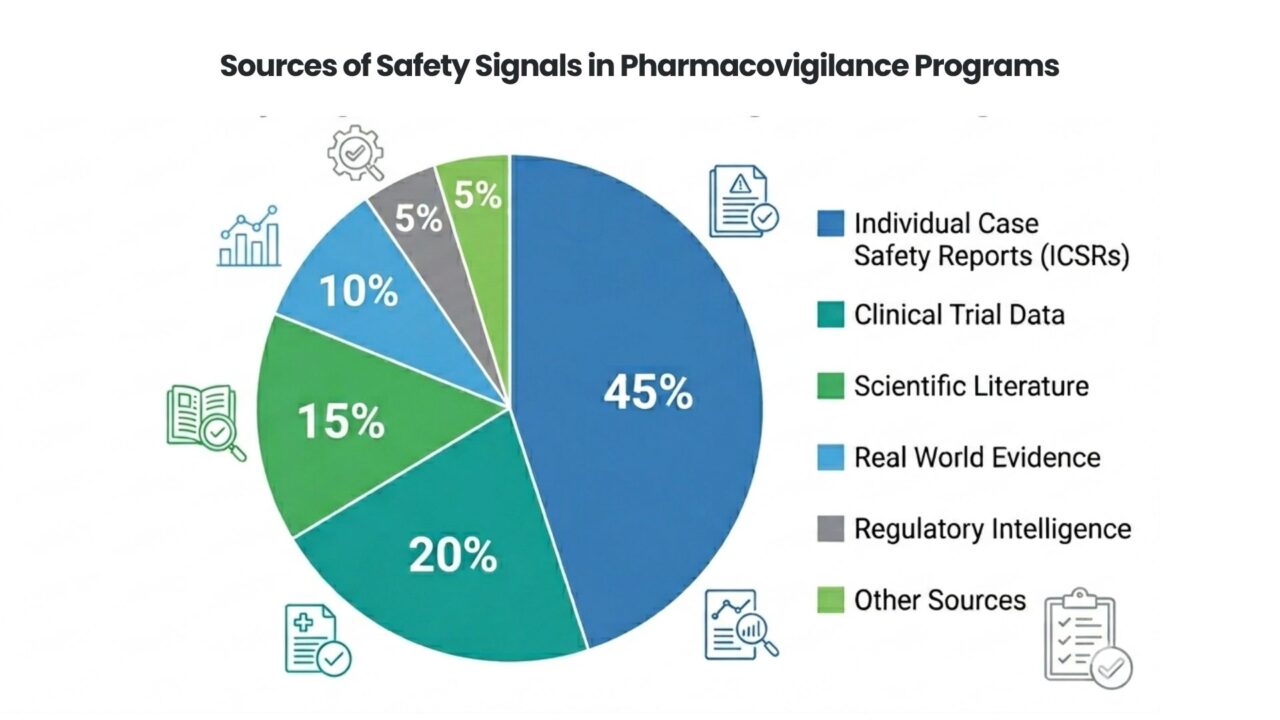
Safety signals can emerge from multiple data sources. While Individual Case Safety Reports remain the primary source for identifying potential safety concerns, literature reviews, clinical trial data, and real world evidence also play an important role in Signal Detection and Risk Management activities.
The Signal Management Process
Safety signals can emerge from multiple data sources. While Individual Case Safety Reports remain the primary source for identifying potential safety concerns, literature reviews, clinical trial data, and real world evidence also play an important role in Signal Detection and Risk Management activities.
Since Individual Case Safety Reports (ICSRs) are a critical component of pharmacovigilance operations, organizations need efficient processes for case intake, processing, medical review, and regulatory reporting. Many companies evaluate experienced ICSR management and case processing service providers in the USA to ensure timely handling of safety reports and maintain compliance with global regulatory requirements
Signal Detection
Potential signals are identified through routine surveillance activities and data analysis. The goal of signal detection is to recognize unusual patterns or trends that may indicate a previously unknown risk or a change in a known safety profile.
Advanced analytics, disproportionality methods, and medical review contribute to identifying unusual patterns.
Signal Validation
Validated signals are prioritized based on potential patient impact. Since organizations may evaluate multiple signals simultaneously, prioritization helps focus resources on issues that present the greatest potential risk.
Factors considered include:
- Seriousness of the event
- Frequency of occurrence
- Clinical significance
- Regulatory implications
Signal Prioritization
Validated signals are prioritized based on potential patient impact. Since organizations may evaluate multiple signals simultaneously, prioritization helps focus resources on issues that present the greatest potential risk.
Factors considered include:
- Seriousness of the event
- Frequency of occurrence
- Clinical significance
- Regulatory implications
Signal Assessment
Medical and safety experts conduct detailed evaluations to determine whether a causal relationship exists. This stage often involves a deeper review of available evidence to understand the potential impact of the signal on the product’s overall benefit risk profile.
This stage often involves:
- Literature reviews
- Statistical analyses
- Benefit risk assessments
- Cross functional safety reviews
Risk Management Actions
When a signal is confirmed, organizations implement appropriate risk mitigation measures. The selected actions depend on the nature of the risk, the strength of the evidence, and the potential impact on patients.
Actions may include:
Label updates
Safety communications
Additional clinical studies
Risk minimization activities
Regulatory submissions
Common Challenges Sponsors Face
Signal detection has become increasingly complex due to growing data volumes and regulatory expectations. As clinical development programs expand globally and post marketing data continues to accumulate, organizations must manage larger amounts of safety information than ever before. Balancing timely signal evaluation, regulatory compliance, and resource availability has become a significant challenge for many pharmacovigilance teams.
Data Overload
A mid sized pharmaceutical company may process more than 50,000 safety cases annually.
Managing such large datasets requires specialized expertise and advanced technology. Without effective processes and analytical tools, identifying meaningful safety trends can become increasingly difficult. Large volumes of data can also increase the risk of delayed signal identification if not managed efficiently.
Global Regulatory Requirements
Organizations must comply with varying expectations from regulatory authorities across different regions.
Consistency in safety monitoring remains a significant challenge. Organizations operating across multiple markets must also keep pace with evolving guidance, reporting obligations, and inspection expectations. Even minor differences in regional requirements can create additional operational complexity for global safety teams.
Resource Constraints
Regulators increasingly expect timely evaluations and documented decision making.
Delays in safety assessments can increase compliance risks and affect patient safety outcomes. Organizations must evaluate emerging information quickly while ensuring decisions are supported by sound scientific evidence. Achieving the right balance between speed and scientific rigor remains an ongoing challenge for many teams.
As safety data volumes continue to increase, many pharmaceutical and biotechnology companies partner with specialized pharmacovigilance providers to support safety surveillance activities. Organizations such as Atvigilx assist with Signal Detection and Risk Management by providing expertise in signal monitoring, validation, aggregate safety review, and risk assessment, helping teams maintain efficient and compliant safety oversight throughout product development and post marketing phases.
Rapid Safety Decision Making
Many development teams struggle with limited pharmacovigilance resources while facing increasing workloads.
Access to experienced drug safety professionals can help organizations manage growing workloads while maintaining the quality and timeliness of safety activities. Resource limitations can also affect the speed and depth of safety evaluations, particularly during periods of increased reporting activity.
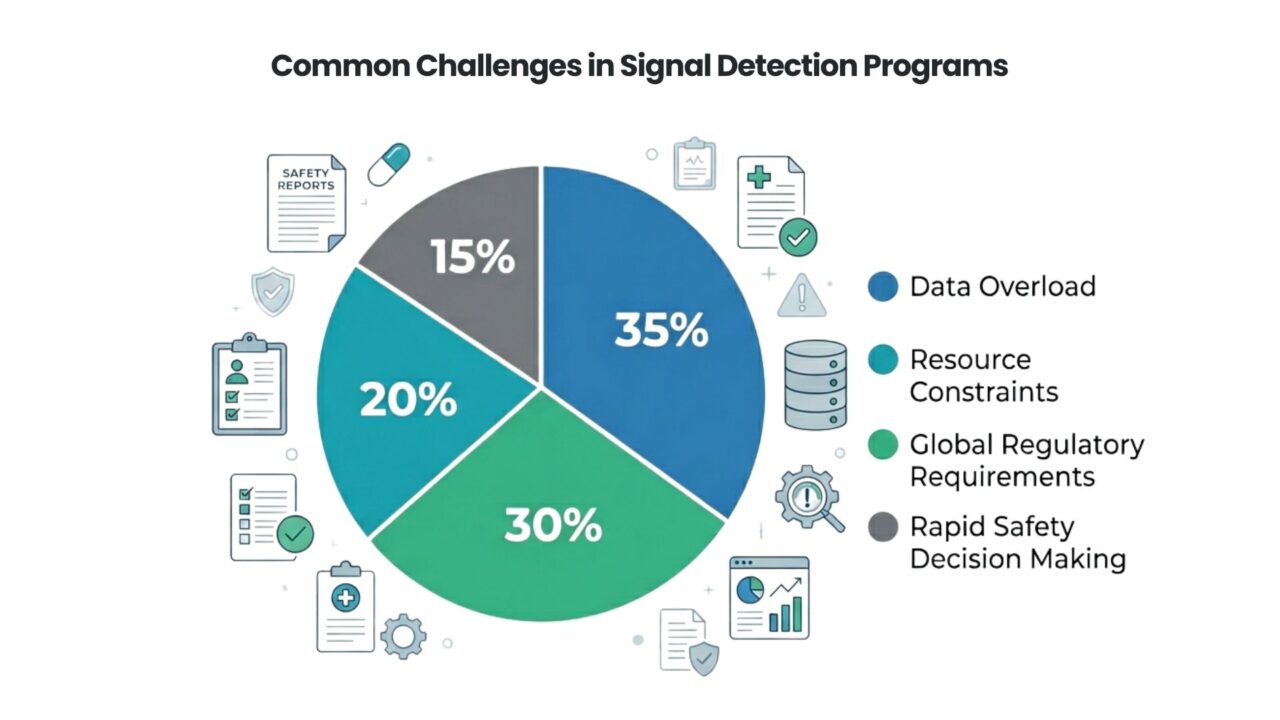
Growing safety data volumes, increasing regulatory expectations, and limited internal resources continue to challenge signal management programs. Organizations often seek specialized Signal Detection and Risk Management support to strengthen safety surveillance and maintain timely risk assessments.
Best Practices for Effective Signal Detection and Risk Management
As safety data sources continue to expand, organizations need structured processes to identify, assess, and manage potential risks efficiently. Implementing proven pharmacovigilance and signal management practices can improve the quality of safety evaluations, support regulatory compliance, and strengthen overall drug safety performance.
Organizations seeking to strengthen their safety programs should consider the following practices:
- Establish documented signal management procedures
- Conduct routine aggregate data reviews
- Integrate literature monitoring into surveillance programs
- Use qualified medical reviewers for signal evaluation
- Maintain cross functional safety review committees
- Track signal metrics and performance indicators
- Perform regular quality assessments
Leading organizations often monitor key performance indicators such as signal closure timelines, validation rates, and regulatory reporting compliance.
Regular review of these metrics helps identify process improvement opportunities and supports more consistent and timely safety decision making.
Final Thoughts
Signal detection is one of the most important components of modern pharmacovigilance. Whether supporting an IND program, preparing an NDA or BLA submission, or managing post marketing surveillance activities, organizations must continuously evaluate emerging safety information.
A proactive approach to safety surveillance and risk evaluation helps identify potential concerns earlier, support informed regulatory decisions, and protect patient safety throughout the product lifecycle.
As regulatory expectations continue to evolve and safety data volumes grow, companies that invest in robust pharmacovigilance processes and signal management strategies will be better positioned to maintain compliance, strengthen product safety profiles, and support long term program success.
References
FDA Guidance for Industry: Good Pharmacovigilance Practices and Pharmacoepidemiologic Assessment
https://www.fda.gov/media/71546/downloadFDA FAERS (FDA Adverse Event Reporting System)
https://www.fda.gov/drugs/surveillance/fda-adverse-event-reporting-system-faersEMA Guideline on Good Pharmacovigilance Practices (GVP) Module IX Signal Management
https://www.ema.europa.eu/en/human-regulatory-overview/post-authorisation/pharmacovigilance-post-authorisation/good-pharmacovigilance-practicesICH E2E Pharmacovigilance Planning Guideline
https://database.ich.org/sites/default/files/E2E_Guideline.pdfCIOMS Working Group VIII Practical Aspects of Signal Detection in Pharmacovigilance
https://cioms.ch/publications/product/practical-aspects-of-signal-detection-in-pharmacovigilance-report-of-cioms-working-group-viii/
Frequently Asked Questions
What is signal detection in pharmacovigilance?
Why is Signal Detection and Risk Management important?
What data sources are used for signal detection?
When should signal detection activities begin?
How can outsourced Signal Detection and Risk Management support benefit sponsors?
Recent Posts
- PV Audit Preparation Frameworks for International Auditors July 21, 2026
- Pharmacovigilance Outsourcing Services: A Strategic Advantage for Pharmaceutical and Biotech Companies July 16, 2026
- ICSR Processing Optimization for Multi-Country Submissions July 13, 2026
- PSUR Harmonization Across FDA, EMA, and CDSCO Requirements July 1, 2026
- A Sponsor’s Guide to Signal Detection for IND, NDA, BLA, and Post Marketing Programs June 22, 2026

Categories

Archives